Custom Trade Show Exhibits Built Around Your Products and Brand
A strong exhibit should help visitors understand what your company does, what you are presenting and why they should stop. That may mean creating dedicated product displays, demonstration areas, branded presentation points, digital content zones or a combination of exhibit elements that work together as one clear experience. Standsbay develops custom trade show exhibits around the way your products, services and brand need to be presented at the event. The exhibit can be planned for one important show or developed with future events in mind where selected elements may be reused or reconfigured. With more than 1,400 exhibition projects delivered across 16 countries since 2012, our approach is based on practical exhibition requirements rather than adding features simply for visual effect.
14+
Years of Experience
1,400+
Projects
16
Countries

Custom Exhibits Built Around What You Need to Present
The starting point is not a catalogue of display elements. It is understanding what visitors need to see, understand or interact with during the exhibition. For some companies, the priority is presenting a physical product clearly enough for visitors to inspect it from different angles. Others need space for live demonstrations, samples, technical explanations or scheduled presentations. A service-led company may need to communicate several capabilities without overwhelming visitors with too much information at once.
We look at the products, services and messages that matter most before deciding how the exhibit should be organised. That helps determine which elements need to attract attention from a distance, which require closer interaction and where staff need space to continue the conversation.
The result should feel like one coordinated custom exhibit solution, not a collection of unrelated display pieces.
What Can Be Included in Your Custom Trade Show Exhibit?
The exact combination depends on what you are presenting and how visitors are expected to engage with it. Some exhibits need only a few carefully developed components, while others require several display elements working together throughout the space.
Product Displays
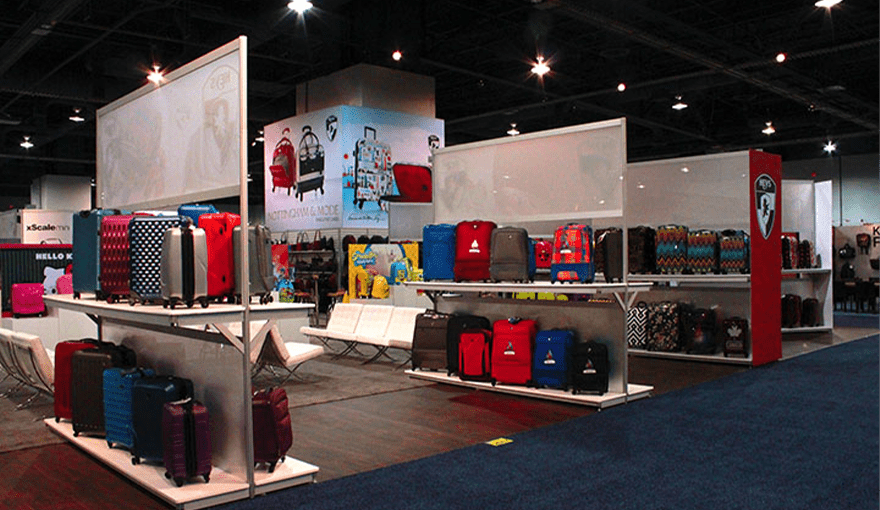
Products can be presented using dedicated display units, shelving, plinths, cases or other purpose-developed presentation features. The format should make the product easy to understand without creating unnecessary visual clutter.
Demonstration Stations
If visitors need to see a product or process in use, a dedicated demonstration point can keep the activity visible while giving the presenter enough working space.
Branded Counters
Counters can support reception, short conversations, product presentation or information handouts. Their role should be defined by how the team actually intends to use them during the show.
Display Cases
Products that require a more controlled presentation can be incorporated into dedicated display cases or enclosed presentation features.
Digital Presentation Areas
Screens or interactive content can be positioned where they genuinely support the visitor journey rather than competing with physical products or key brand messages. Where digital content forms an important part of the exhibit, the equipment requirements can be reviewed alongside our audio visual equipment rental service so screens and presentation technology are considered at the right stage.
Branded Exhibit Features
Custom branded elements can help connect the individual components visually so the exhibit reads as one environment rather than several separate display units. Where large-format artwork, branded surfaces or printed display elements are required, these can be coordinated through our trade show graphics printing service once the final dimensions and artwork positions are confirmed.
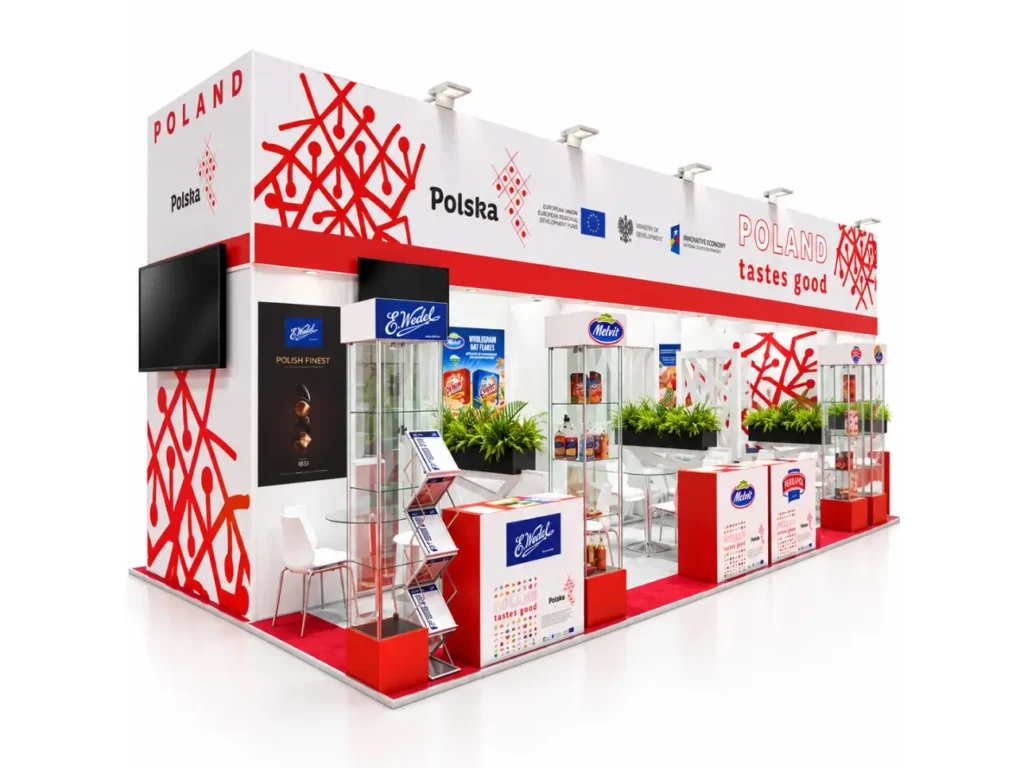
Exhibit Experiences Planned Around Visitor Interaction
A trade show exhibit works differently when visitors are expected to watch a demonstration, inspect a product, use an interactive display or have a detailed conversation with a member of the team. The exhibit therefore needs to be planned around those actions rather than around appearance alone.
We consider what visitors should notice first, what deserves closer attention and what they should be able to do once they reach the exhibit. A technical product may require explanation and hands-on interaction. A new launch may need one clear focal point. A company presenting several product families may need a more structured sequence so visitors can understand the offer without having to search for information.
Digital content can support that experience when it serves a clear purpose. It may help explain a process, show a product in use or communicate information that cannot be demonstrated physically at the show. The important point is that every element should have a reason to be there.
That practical focus helps the exhibit support product understanding and useful conversations instead of simply filling the available space.
- Highlight the main product or message first
- Guide visitors toward key exhibit elements
- Make product displays easy to understand
- Create space for live demonstrations
- Support hands-on product interaction
- Position digital content with a clear purpose
- Make staff conversations easy to continue
- Keep the visitor experience clear and focused
Custom Exhibit Solutions for One Show or Multiple Events
Not every exhibitor has the same long-term requirement. Some companies need a one-off exhibit for a flagship event, while others attend several exhibitions throughout the year and want selected components to remain useful after the first show.
One-Show Exhibit Requirements
For a major launch, important industry event or one-off presentation, the exhibit can be developed specifically around the products, audience and communication priorities of that event. The focus is on creating the right combination of display elements for that particular exhibition rather than compromising the concept for an unknown future use.
Multi-Show Exhibit Requirements
If several events are already planned, it can be useful to consider future requirements during the initial development stage. Selected display components, counters, branded elements or presentation features may be developed so they can be reused or adapted where practical.
That does not mean every part of an exhibit will work unchanged at every show. Different venues, available spaces, visitor patterns and product requirements can affect what needs to change. The benefit comes from identifying early which elements have genuine reuse potential and which are better developed for a specific event.
Cases of Custom Exhibition Booth
Reusable and Reconfigurable Exhibit Components
Reuse is most effective when it is considered before the first exhibit is produced. Some components can potentially move from one event to another with relatively small changes. A branded counter may remain useful with updated graphics. A product display may be repositioned or combined with different elements. Digital presentation units may be reused with new content. Other features may need modification because the next event has different dimensions, products or presentation requirements.
We therefore look at reuse realistically rather than treating it as an automatic feature of every exhibit. Important questions include how many events are planned, whether the same products will be presented, how much the available space is likely to change and which components are genuinely worth retaining.
For companies with a regular exhibition schedule, this can create a more practical long-term approach than treating every event as a completely separate project.
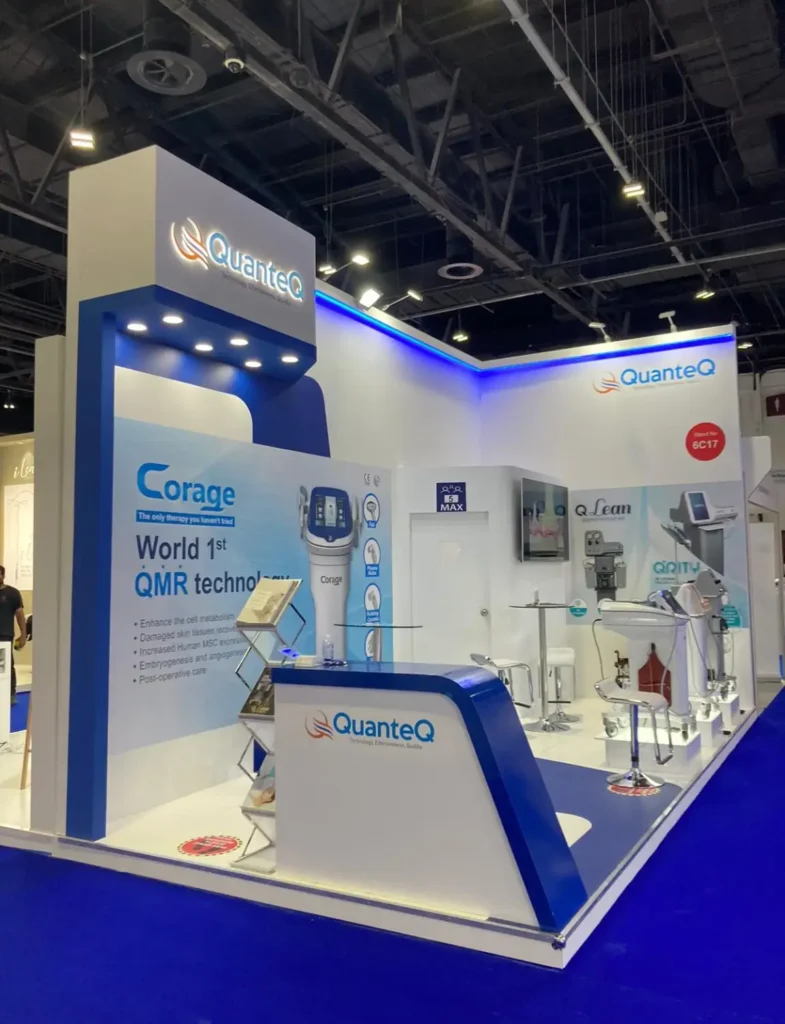
Custom Trade Show Exhibit Projects Across Global Markets
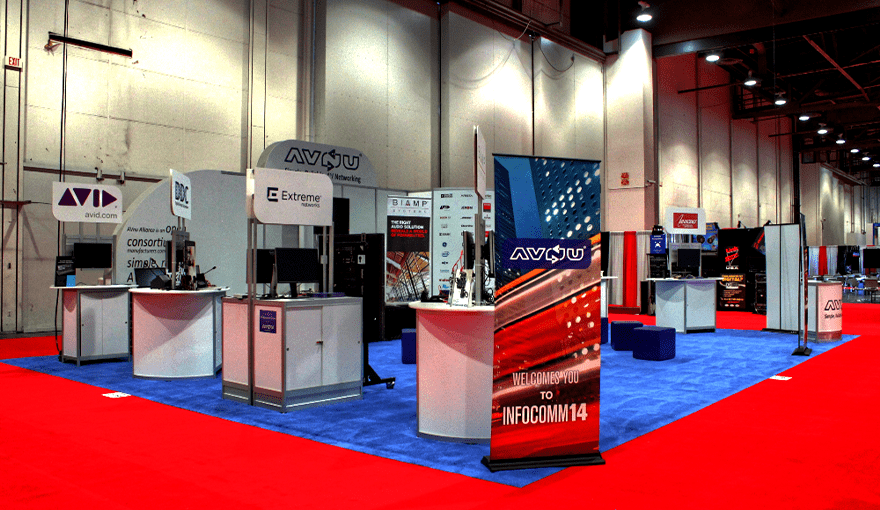
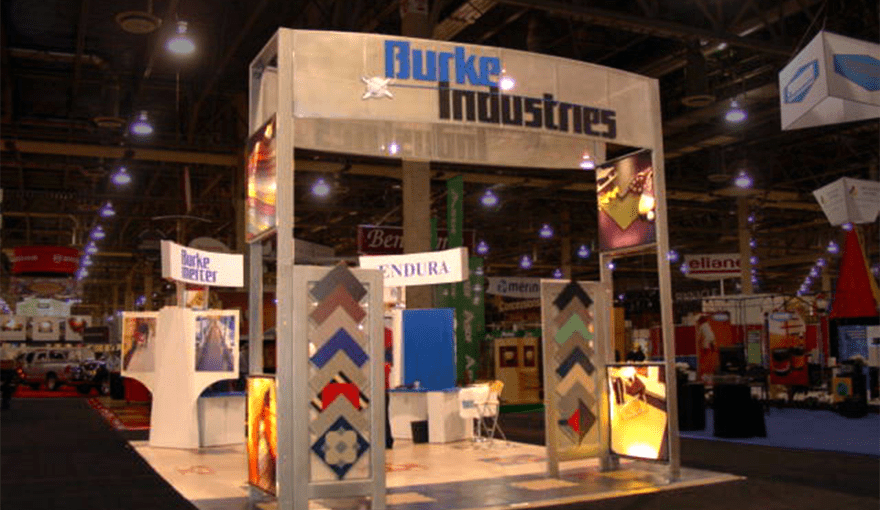
Standsbay has delivered exhibition projects across a wide range of markets, industries and venue environments. Each project is developed around the exhibitor’s products, presentation goals and event requirements, supported by real project experience and completed work.


















What We Need to Prepare Your Custom Exhibit Proposal
The most useful starting point is a clear understanding of what you want visitors to experience. You do not need to have every detail decided before speaking with us, but the more context we have, the more relevant the initial direction can be.
Where available, send us the exhibition name, venue, event dates, available floor plan, brand guidelines and details of the products or services you plan to present. It is also helpful to explain whether demonstrations are required, which elements are most important to the visitor experience and whether you already own display assets that could potentially be used again.
If the exhibit may be used across several events, let us know which shows are already planned and whether the available space is expected to change. Existing photographs, sketches or reference material can also help us understand what you want to retain or improve.
Where a visual review is needed before production, the proposed direction can be developed further through our 3D rendering and concept development process so the main exhibit elements and presentation direction can be reviewed before final approval.
Why Exhibitors Choose Standsbay for Custom Trade Show Exhibits
Standsbay has worked in the exhibition industry since 2012 and has delivered more than 1,400 projects across international markets. Our custom exhibit approach focuses on how products, branded elements and visitor interactions work together, with practical planning for both single events and repeat exhibition programs.
14+ Years of Experience
Exhibition experience since 2012 across varied industries and event environments.
1,400+ Projects Delivered
More than 1,400 exhibition projects completed across international markets.
Designed Around the Actual Space
Exhibit elements are developed around products, demonstrations and visitor interaction.
Approved Before Production
Selected exhibit components can be considered for reuse or adaptation where practical.
Questions Exhibitors Ask Before Planning a Custom Trade Show Exhibit
What is included in a custom trade show exhibit?
A custom trade show exhibit can include product displays, demonstration stations, branded counters, display cases, digital presentation points and other purpose-developed elements. The exact combination depends on what needs to be presented, how visitors are expected to interact with it and whether the exhibit is intended for one event or several. Where the proposed arrangement needs to be reviewed visually before production, our 3D rendering and concept development service can support that stage.
How is a custom trade show exhibit different from a standard exhibit setup?
A standard display normally works within a predetermined format, while a custom exhibit is developed around the products, brand messages and visitor interactions required for a particular exhibition. This gives greater control over what is presented and how individual exhibit elements work together. If the requirement is primarily for a reusable pre-existing display format rather than a purpose-developed exhibit solution, our trade show booth rental page explains that option separately.
Can exhibit components be reused at future events?
Yes, selected components may be suitable for reuse, but this depends on how they are developed and how similar the future requirements are. Counters, product displays, digital presentation units and branded features may be reusable or adaptable, while other components may need modification for a different event. If components are being retained between exhibitions, the requirements for holding them between events can also be considered through our trade show storage service where appropriate.
Can an exhibit be adapted if the available space changes?
In many cases, some exhibit components can be repositioned, removed or combined differently for another exhibition. The extent of the changes depends on the new space, the products being presented and the components used in the original exhibit. If future adaptation is important, it should be discussed at the beginning of the project rather than after the first exhibit has already been produced.
Can you work with exhibit assets we already own?
Existing assets can be reviewed as part of the new requirement. If a display unit, counter, digital element or branded component is still suitable, it may be possible to incorporate it into the updated exhibit instead of replacing it unnecessarily. Its condition, dimensions and compatibility with the new direction need to be considered first. Where existing printed graphics no longer fit the updated presentation, replacement artwork can be handled through our trade show graphics printing service.
What affects the cost of a custom trade show exhibit?
Cost is influenced by the number and complexity of exhibit components, display requirements, materials, digital elements, specialised product presentation features and the overall scope of the project. Reuse of suitable existing assets can also affect the final requirement. A meaningful estimate therefore needs to be based on the actual exhibit brief rather than a generic price per square metre.
What information do you need for a custom exhibit proposal?
The most useful information includes the exhibition and venue, event dates, available floor plan, products or services being presented, brand guidelines, demonstration requirements and any existing exhibit assets. If several exhibitions are planned, details of those events can also help us understand whether selected components should be developed for reuse. Where several activities and deadlines need to be coordinated across a larger exhibition program, our trade show project management service can support the wider execution separately.
Is a custom exhibit suitable for companies attending multiple trade shows?
It can be, particularly when the company wants consistent brand presentation and has exhibit elements that can realistically be used again. The best approach is to identify which components should remain consistent and which are likely to change between events, rather than assuming one fixed exhibit will suit every show.
Planning a Custom Exhibit for an Upcoming Show?
Tell us which exhibition you are attending, what you need to present and whether the exhibit is intended for one event or a wider series of shows. We can review the products, visitor requirements and existing assets before recommending a practical custom trade show exhibit direction.